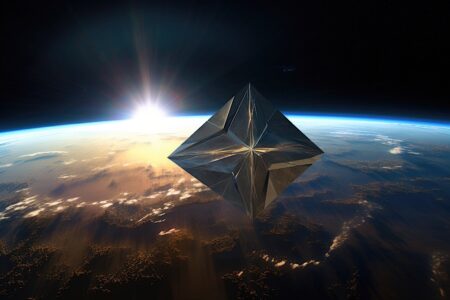

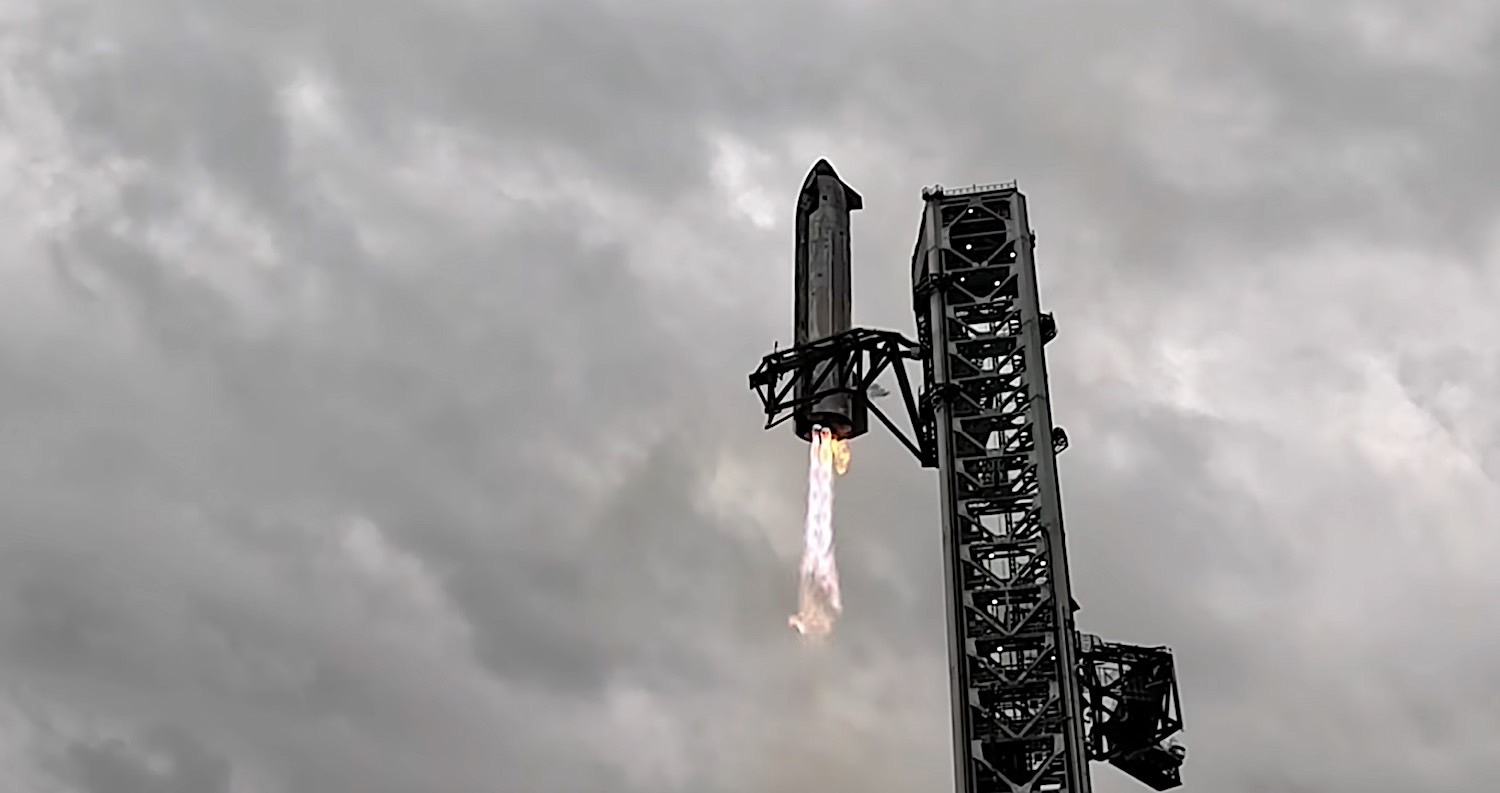
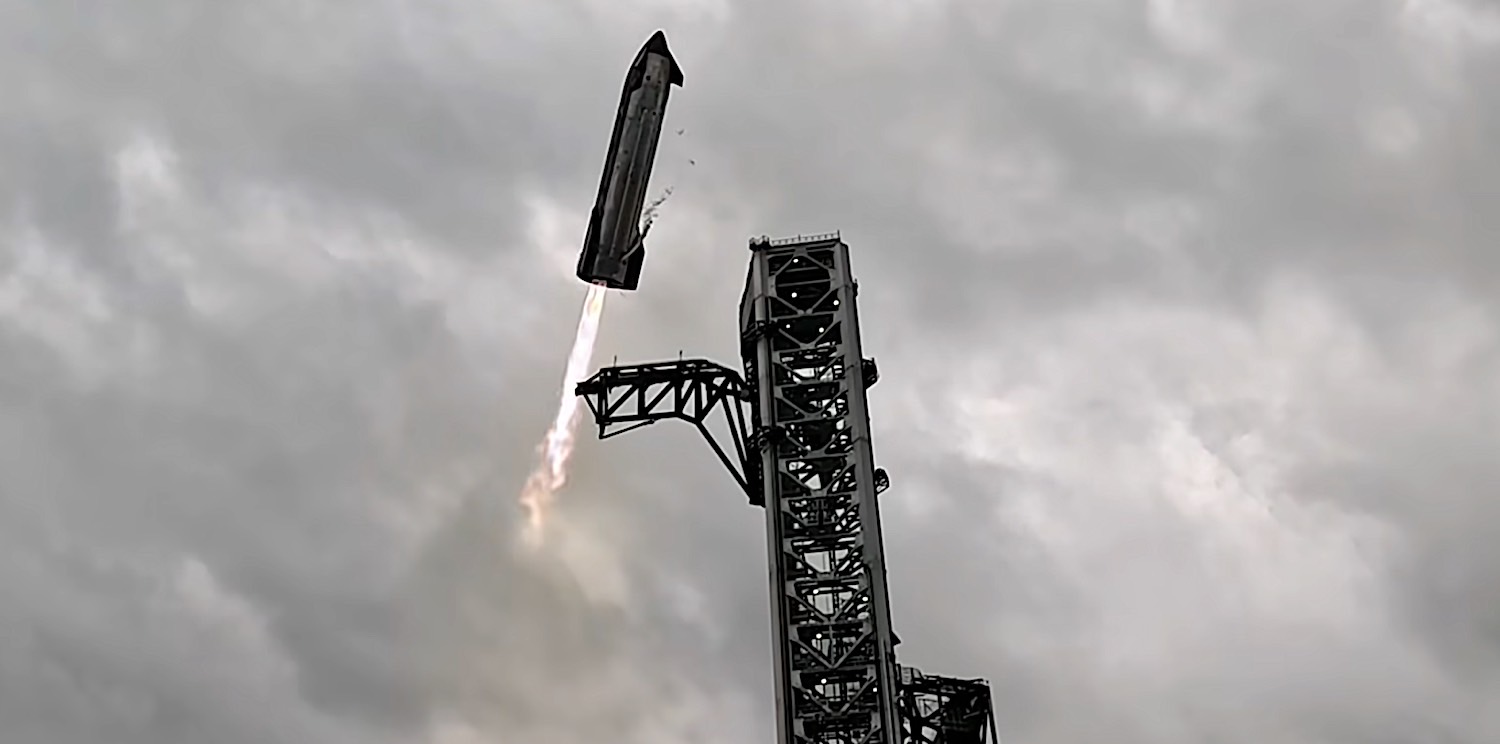
Innovation First: On November 14, 2026, SpaceX’s Starship upper stage returned from a 22-hour, 14-orbit mission and was caught midair by the mechanical arms of its launch tower at Starbase, Texas . It was the first time an orbital spacecraft had been recovered this way. The booster was lost to a controlled diversion, but the ship’s capture is the milestone that matters for upper-stage reusability.
Innvoation Solution: the interesting “engineered design” story is not the spectacle. It is the tolerance stack-up, the control architecture, and the propulsion sequence that made a two-point midair docking possible.
Watch the catch from 8 different cams:
Top Five Things to Know
(From an Engineering Design Perspective)
- The capture interface is are “tiny fittings”, not a wrap-around hug.
The capture interface does not wrap around the stainless-steel body, despite the characterization as “catch glove.” The ship is caught by two small structural fittings (nicknamed “chopsticks” near its upper section, each extending only about a foot from the vehicle . That makes the capture a precision alignment problem, not a mechanical grabbing problem. The ship must arrive with tightly controlled lateral movement, attitude, and descent rate so those fittings meet the tower’s support surfaces in exactly the right position. Any major misalignment at contact loads both the vehicle structure and the tower with enormous stress . - The tower arms were redesigned for speed, not just strength. SpaceX’s Pad 2 “chopsticks” (as they’ve been called) for the V3 generation are shorter than earlier arms, allowing them to move faster and better track an incoming vehicle. The main actuators switched from hydraulic to electromechanical systems for better speed, redundancy, and reliability . The design implication is that the tower is an active control system in the capture loop, not passive infrastructure. Ship and tower have separate, closely coordinated jobs: the ship’s flight computers guide it into the capture envelope; the tower’s actuators position the arms to receive it .
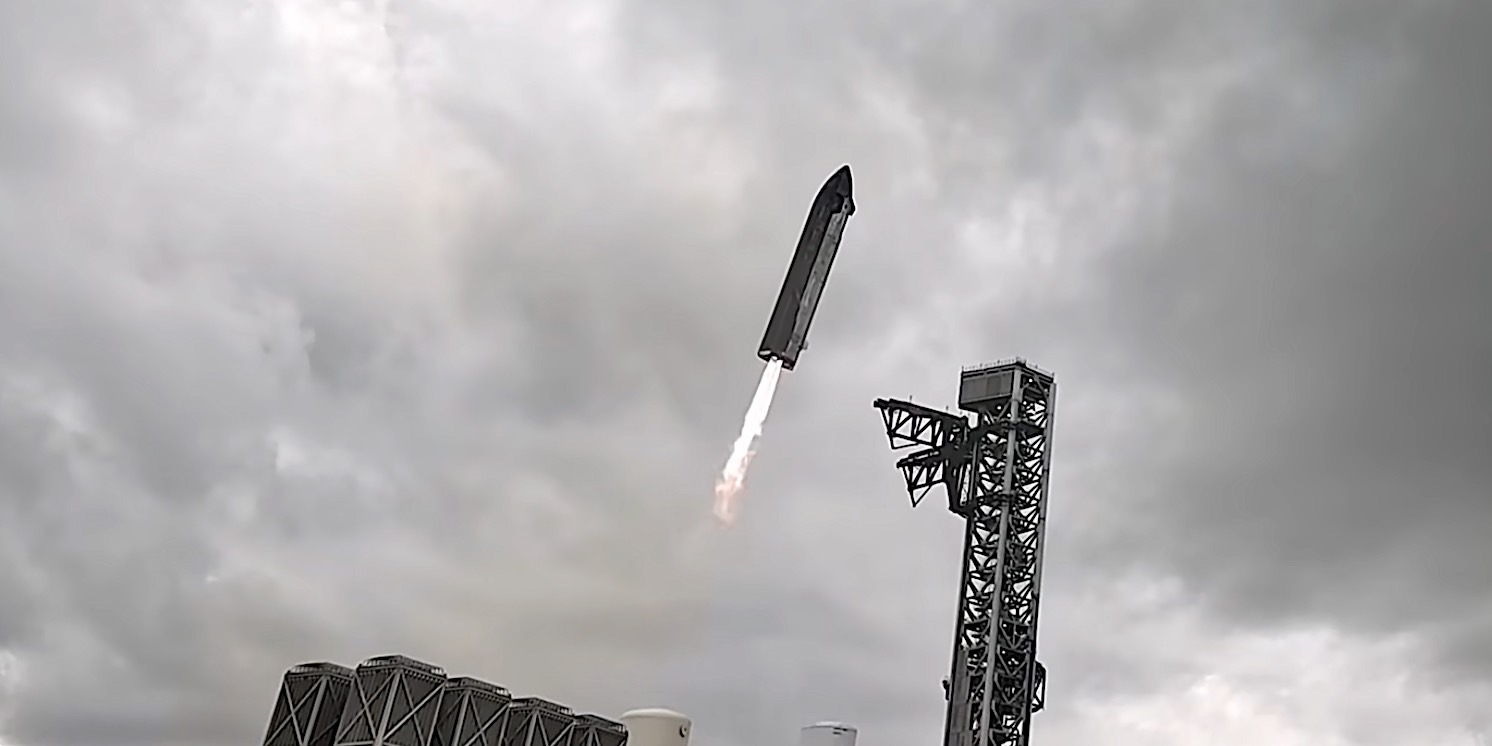
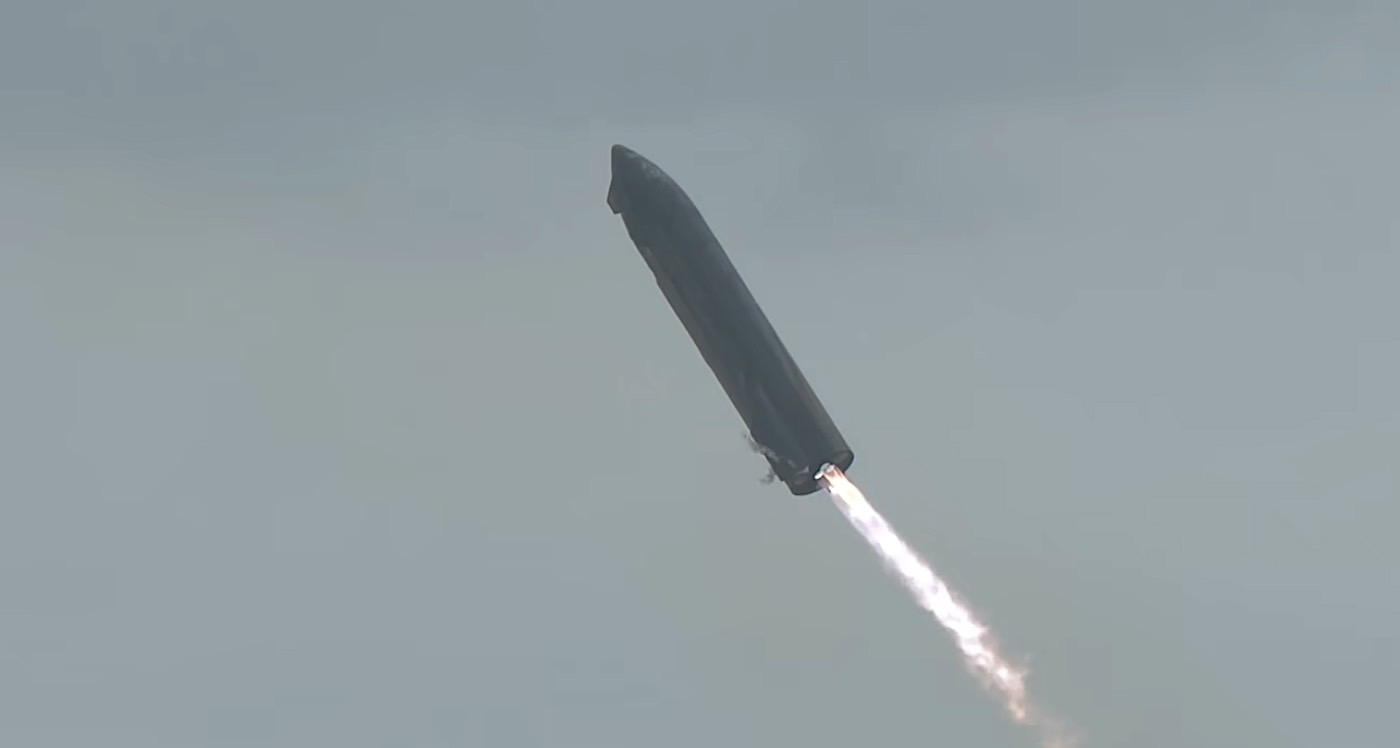
- Three engine relights turn a falling ship into a hovering target. The ship did not glide in. It relit three Raptor engines to brake, flip upright, and stabilize its descent before the arms closed . The final engine shutdown occurs only after contact is registered . This is a powered, closed-loop terminal phase with no second approach. The control logic must manage thrust, attitude, and translation simultaneously while the vehicle’s mass and aerodynamic state are changing rapidly. The margin for error is thin by design: a ship that fails to reach the tower has few good fallback options compared with a vehicle carrying landing legs .
- The approach path required a new terminal maneuver. Starship performed a sweeping final turn back toward Starbase—described as a “swoosh”—that brought it around to approach the tower from the Gulf side, rather than following the booster’s usual return direction . Reaching the coordinates is not enough. The ship also needs tightly controlled heading, attitude, and lateral movement for the final maneuver. SpaceX’s V3 redesign introduced upgraded multi-sensor navigation built for high-precision autonomous flight with greater redundancy . The return path and tower approach are designed as one integrated problem.
- The hard engineering work starts after the catch. A successful capture proves the method can work. It does not prove reusability. The recovered ship must now be inspected, and the findings will drive the next design revision . The thermal protection system is the immediate question: roughly 18,000 hexagonal ceramic fiber tiles cover the windward side, and the reentry stagnation temperature at the nose and flap hinges exceeds 1,400°C . If more than 10% of tiles need replacement after each flight, a single maintenance cycle easily exceeds 30 days, which would undermine the economics of rapid reuse . The Raptor 3 engines also went through a full cycle of ground ignition, vacuum exposure, reentry heating, and landing relight; engineers will use endoscopes to check for thermal fatigue microcracks in turbopump blades and combustion chamber cooling channels .
Innovation Highlights
The mission.
Starship launched on Flight 15 and deployed 26 Starlink satellites before reentering after approximately 22 hours and 14 orbits . The ship descended through cloud, relit three Raptors, flipped vertical, and settled into the arms. The final Raptor shut down after contact registration . The vehicle was left hanging a few hundred meters above the ground, charred from reentry .
The booster miss.
SpaceX had intended a double catch. The Super Heavy booster’s return was aborted because remaining propellant fell below the safe capture threshold, and the flight safety logic automatically switched to a controlled offshore splashdown in the Gulf of Mexico . The booster was lost. SpaceX had previously caught the booster three times, so the technique was already validated; the ship capture was the new variable .
What changed in the hardware.
The V3 ship and Pad 2 arms were designed as a matched pair. The arms are shorter and faster, with electromechanical actuators replacing hydraulic ones . The ship’s navigation suite was upgraded for high-precision autonomous approach . The capture fittings are integrated into the ship’s structure, which means SpaceX has little reason to maintain a separate recovery option for later vehicles .
The honest caveat.
One catch demonstrates feasibility. Reliability, turnaround time, and cost per flight require many more flights. Wind, rain, and rougher reentries have not been tested . The booster abort on the same mission is a reminder that the control logic will refuse a catch it considers unsafe, which protects the pad but means some flights end without a recovery .
Citation List
1. ABP Live English — “SpaceX Catches Starship Rocket Upper Stage Using Giant ‘Chopsticks’ In Historic First”
https://news.abplive.com/science/elon-musk-spacex-catches-starship-rocket-upper-stage-using-giant-chopsticks-mechazilla-historic-first-video-1876001/amp
Summary: Reports Ship 42 spent 22 hours in orbit, completed 14 revolutions, and deployed 26 Starlink V3 satellites before being caught by Mechazilla. Notes the booster recovery was aborted and diverted to an offshore splashdown. Provides basic mission timeline and confirms the first orbital ship catch.
2. RNZ — “SpaceX catches Starship with giant ‘chopstick’ arms in fresh leap for reusable rockets”
https://www.rnz.co.nz/news/world/2607851/spacex-catches-starship-with-giant-chopstick-arms-in-fresh-leap-for-reusable-rockets
Summary: Concise account of the reentry sequence: one engine fired for the deorbit burn, atmospheric plunge slowed the ship from roughly 17,000 mph, then three engines reignited to flip the vehicle vertical and steer toward the tower. The chopsticks clasped the ship as it hovered in place.
3. Yahoo / Tech — “SpaceX catches Starship for the first time after launch from Texas”
https://tech.yahoo.com/science/articles/spacex-catches-starship-first-time-215949282.html
Summary: Provides mission context including launch time, the booster diversion due to low fuel (per Musk), and the ship’s return path over Mexico before swinging out over the Gulf and flipping for the catch. Confirms this was Flight 15 and the fourth launch of the V3 generation.
4. Spaceflight Now — “Starship in orbit ahead of catch attempt, booster diverts to explosive splashdown”
https://spaceflightnow.com/2026/11/13/live-coverage-starship-flight-15-attempts-to-recover-full-vehicle-in-double-launch-pad-catch/
Summary: Detailed account of the booster abort, including the SpaceX commentator’s clarification that GNC detected the booster was not in the correct position and triggered an automated abort to the offshore splashdown location. Useful for understanding the safety logic behind the missed booster catch.
5. Shattered — “Starship Catch Hardware: 3 Engines, 2 Arms, 14 Orbits”
https://shattered.io/starship-catch-hardware-three-engines-two-arms-14-orbits/
Summary: Focuses on the capture hardware and sequence. States the arms close on the ship’s two catch fittings below the forward flaps, and the final Raptor shuts down after contact is registered. Frames the tower catch as a recovery method that moves work from the vehicle to the ground infrastructure. Notes one catch does not prove reusability.
6. Yahoo / Tech — “Musk Agrees Starship’s Heat Shield Hit a ‘99.995% Reliability Rate’ on Its First Catch”
https://tech.yahoo.com/science/articles/musk-agrees-starship-heat-shield-145901227.html
Summary: The primary source for the heat shield post-flight assessment. Reports roughly 18,000 tiles with one lost, which Musk agreed equates to about 99.995% reliability. Also reports Musk’s statement that ablative material scraped by the chopsticks will be replaced with stainless steel wool for future flights. Frames heat shield reusability as the key remaining challenge.
7. Via Satellite — “SpaceX Catches Starship In Landing After Orbital Flight for First Time”
https://www.satellitetoday.com/launch/2026/11/15/spacex-catches-starship-in-landing-after-orbital-flight-for-first-time/
Summary: Confirms the engine sequence: a single Raptor relit for the deorbit burn, then three engines lit for the descent into the chopstick arms. Brief but citable for the propulsion sequence.
8. X post by Ming (@tslaming) — Pad 2 chopstick redesign details
https://x.com/tslaming/status/2122327579910873593
Summary: Secondary/social source for the Pad 2 chopstick changes: shorter arms for faster movement and better tracking, and electromechanical actuators replacing hydraulic systems for speed, redundancy, and reliability. Also notes the ship’s flight computers guide it into the capture envelope while tower actuators position the arms. Treat as supplementary rather than primary.
9. Times Now — “SpaceX Makes History, Catches Starship Straight From Orbit”
https://www.timesnownews.com/world/us/us-news/spacex-starship-caught-from-orbit-starbase-south-texas-watch-videos-article-156510915
Summary: General news account confirming the ship hovered briefly before moving between the arms. Notes the booster detected a guidance and navigation control issue and performed a simulated landing over the Gulf. Also notes experts caution that heat shield and engine turnaround remain unproven.