
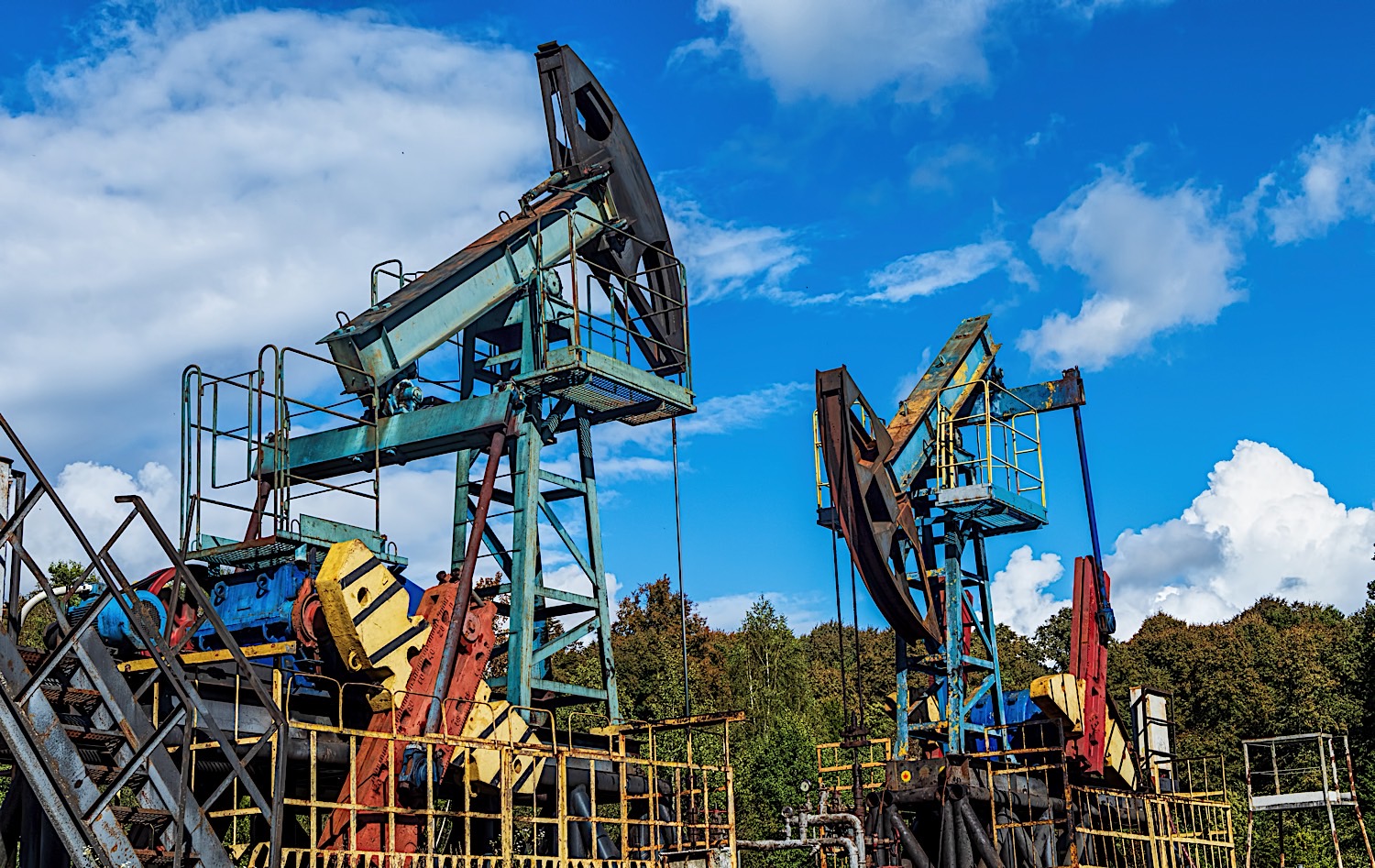
For engineers designing and operating sucker rod pump (SRP) systems, paraffin wax deposition is the silent killer of uptime. It doesn’t announce itself with a bang or a catastrophic failure. Instead, it accumulates slowly, grain by grain, increasing mechanical loads, reducing pump efficiency, and eventually seizing the system entirely — often in the dead of night, hundreds of miles from the nearest service crew.
Traditional approaches to paraffin management are reactive: run the pump until efficiency drops, then schedule a hot oil treatment or mechanical scraping. But a new generation of physics-informed predictive algorithms, integrated directly into 4th-generation SCADA systems, is changing that calculus. By analyzing subtle shifts in load variation and motor current, these systems can now predict wax deposition days or weeks before it becomes operationally critical — and do so without the “black box” opacity that makes deep learning unacceptable in safety-critical oilfield environments.
The Economics of Wax: More Than an Annoyance
The scale of the paraffin problem is difficult to overstate. In fields with high paraffin content crude, wax deposition can reduce pump efficiency by 30-50% within weeks of a cleaning cycle . More critically, when wax accumulation triggers a pump-off condition or seized pump, the resulting downtime costs can run into tens of thousands of dollars per day in lost production, plus the expense of a workover rig and replacement components.
Predictive maintenance
Anticipating failure before it occurs emerged as the single highest-ROI application in oil and gas. Shell, one of the industry’s early adopters, has reportedly cut unplanned downtime by 20% and reduced maintenance costs by 15% through predictive approaches . But those fleet-wide numbers only hint at the potential. For a single high-volume well, preventing one unscheduled workover per year can save $500,000 or more.
The challenge has always been what to predict and how to predict it. Vibration monitoring, temperature sensors, and acoustic analysis all provide useful data layers. But paraffin deposition has a unique signature: it manifests first as a gradual, then accelerating, increase in mechanical load that can be detected through existing SCADA measurements without adding new hardware.
The Physics-Informed Breakthrough
A landmark 2026 study published in MDPI Applied Sciences provides a validated framework for predictive paraffin elimination in sucker rod pump systems . The researchers, based at oilfield technology centers in the Russian Federation, developed a method that integrates:
- Real-time SCADA data (load on the rods, motor current, pump fillage)
- Historical well performance (production rate trends, prior cleaning cycles)
- Physical models of wax deposition kinetics (temperature-dependent crystallization rates)
The key insight: rather than treating SCADA data as black-box inputs to a neural network, the researchers built a composite early warning index based on load span (the difference between peak and minimum rod load) and motor current trending.
|
Parameter |
Normal Operating Range |
Wax Warning Threshold |
Critical Action Threshold |
|
Load Span |
±5% of baseline |
+10-15% sustained increase |
+20% and rising |
|
Motor Current |
±3% of baseline |
+5-8% increase |
+10% with load span increase |
|
Pump Fillage |
70-90% |
<60% without other causes |
<50% combined with load increase |
The beauty of this approach is its interpretability. Unlike a deep learning model that outputs a “failure probability score” without explanation, the physics-informed system tells the engineer why the alarm is sounding: “Load span has increased 12% over 72 hours, consistent with wax deposition at current wellhead temperature of 38°C.” This transparency is not a luxury in oil and gas — it is a regulatory and safety requirement.
From Theory to Field Validation
The MDPI study did not stop at simulation. The researchers validated their predictive framework across multiple field wells with known paraffin problems . Results demonstrated that the composite early warning index could identify wax accumulation reliably before pump efficiency dropped below acceptable thresholds.
More importantly, the study showed that statistical survival models — which estimate the probability that a pump will continue operating for a given additional period — outperformed pure machine learning approaches for this specific application. The reason: survival analysis naturally handles censored data (wells that were cleaned before failure, wells still running at study end) and provides explicit confidence intervals around predictions.
For engineered designers, this has profound implications. It suggests that the optimal predictive maintenance system for paraffin is not the most complex neural network, but rather the most well-calibrated statistical model that respects the underlying physics of wax deposition.
The SCADA Evolution: 4th Generation and Beyond
Enabling this predictive capability requires SCADA systems that have evolved beyond simple data logging. Fourth-generation SCADA platforms incorporate:
- Edge computing for real-time load and current analysis without cloud latency
- Historical trending databases that retain years of well-specific performance data
- Configurable alert rules that can be tuned for individual well characteristics (API gravity, water cut, ambient temperature variations)
A 2026 industry report from STX Next highlights that predictive maintenance in oil and gas is now moving from “condition monitoring” (sensing current state) to “prescriptive maintenance” (recommending specific actions and timing) . For paraffin management, this means the system can advise: “Schedule hot oiling within the next 48 hours. Delaying beyond 96 hours carries a 35% risk of pump seizure.”
Crucially, these systems do not require replacing existing field instrumentation. The 4th generation advantage lies in software and analytics layers that extract new value from existing measurements — load cells, current transformers, and pressure transducers already installed on most SRP installations.
Why Not Deep Learning?
This is a critical question for any engineered designer evaluating predictive maintenance solutions. Deep learning offers impressive accuracy in controlled settings, but it carries significant liabilities in oilfield applications:
|
Consideration |
Physics-Informed Statistical Models |
Deep Learning / Black-Box AI |
|
Interpretability |
High — explicit load/motor current thresholds |
Low — “the model says failure risk is 87%” |
|
Regulatory Acceptance |
Established (API, ISO frameworks) |
Emerging — qualification standards still developing |
|
Data Requirements |
Moderate — months of history sufficient |
High — years of data with hundreds of failure events |
|
Transferability |
High — physical principles generalize |
Low — model may not transfer between fields |
|
Safety Certification |
Possible today |
Difficult — explainability requirements unmet |
The Capgemini ER&D Pulse Report 2026 makes this distinction explicitly: while generative AI faces significant accuracy and hallucination hurdles for engineering applications, “Scientific AI” and machine learning with physical constraints are rated as high-potential precision tools . For paraffin prediction, the physics provides the constraint that pure statistical learning lacks.
Designing for Predictive Maintenance
For engineers designing new SRP installations or upgrading existing ones, the predictive paraffin framework suggests several practical design considerations:
1. Sensor Selection and Placement
Ensure load cells and current transformers provide sufficient resolution (minimum 1% of full scale) and sampling rate (at least one reading per stroke cycle). Many legacy installations use sensors sized only for alarm limits, which lack the granularity needed for trend detection.
2. Data Historian Retention
Design data storage with a minimum 24-month rolling history for each well. Seasonal temperature variations dramatically affect wax deposition rates, and year-over-year comparisons provide the best baseline for anomaly detection.
3. Configurable Alert Hierarchies
Build SCADA logic with three-tier alerts: advisory (trend emerging, schedule monitoring), warning (intervention recommended within days), and critical (immediate action required). Avoid binary alarm logic that trains operators to ignore nuisance alerts.
4. Hot Oiling Integration
If hot oiling or chemical injection is the remediation method, design the control system to log cleaning cycles automatically and reset baseline load values afterward. This closes the loop between prediction and action.
The Bottom Line for Engineered Designers
Paraffin deposition will never be eliminated entirely — it is a physical property of waxy crude that cannot be designed away. But the cost and disruption of unscheduled wax-related failures can be dramatically reduced through predictive approaches that leverage existing SCADA data.
The 2026 MDPI study provides a validated, field-tested framework that any operator can implement. The key requirements are modest: sufficient historical data, interpretable statistical models, and SCADA systems configured for trend detection rather than simple alarm limits.
For a typical mid-sized field with 50 SRP wells, implementing predictive paraffin monitoring could prevent 10-15 unscheduled workovers annually. At an average cost of 50,000 per work over (rigtime,lostproduction,replacementparts),the potential annual savings exceed 500,000 — often with no new hardware required.
The silent killer, it turns out, is not so silent once you know what to listen for.
Sources and Further Reading
- MDPI Applied Sciences (February 2026). Optimization of Oil Production Through Predictive Modeling for the Timely Elimination of Paraffin Deposits in Sucker Rod Pump Installations. Link
- STX Next (March 2026). Predictive Maintenance in Oil & Gas: From Condition Monitoring to Prescriptive Analytics. Link
- Capgemini (January 2026). ER&D Pulse Report 2026: Engineering Research & Development in the Age of AI. Link
- International Association of Oil and Gas Producers (IOGP). Predictive Maintenance Recommended Practices. (Report 677, revised 2025)
- Society of Petroleum Engineers (SPE). *Paper SPE-215831-MS: Comparative Analysis of Statistical vs. Machine Learning Approaches for Rod Pump Failure Prediction.* (2025 Annual Technical Conference)