
Spacecraft have always faced a fundamental constraint: fuel. Every maneuver, every orientation adjustment, every life-extension burn consumes propellant. Once the fuel runs out, the mission ends—regardless of whether the spacecraft’s instruments remain functional. A New Zealand startup has shattered that paradigm. Zenno Astronautics has become the first company in history to successfully operate a superconducting product in space, validating a technology long considered a key enabler for the future of space infrastructure and opening the door to a new era of fuel-free, electromagnetically driven spacecraft .
The Technology: Z01™ Supertorquer
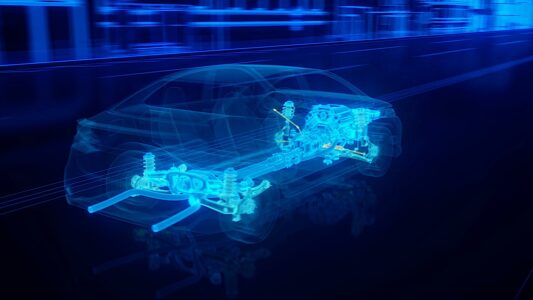
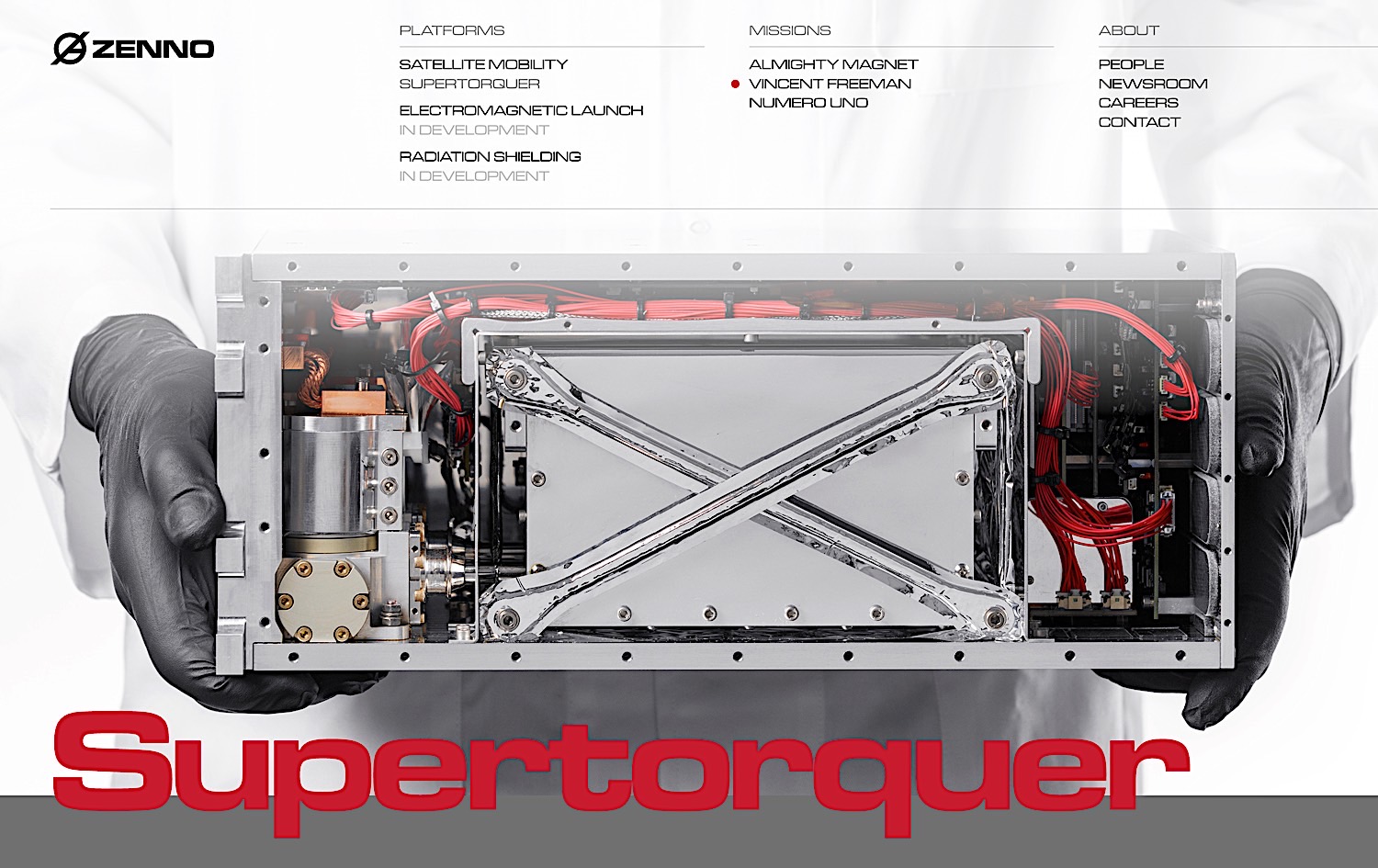
Zenno’s flagship product, the Z01™ Supertorquer, is the world’s first superconducting magnetic torquer for spacecraft attitude control . The technology is deceptively simple in concept yet extraordinary in execution: a compact superconducting magnet generates a controllable three-dimensional magnetic field that interacts with Earth’s natural magnetic field, allowing a satellite to adjust its orientation without expending a single drop of fuel .
The system leverages high-temperature superconductors to generate powerful magnetic fields with near-zero energy losses . Because the superconducting coils operate with virtually no electrical resistance, they can maintain strong magnetic fields while consuming minimal power—a critical advantage for power-constrained spacecraft.
Key advantages over traditional systems
- Fuel-Free Operation: Eliminates the need for chemical propellant, significantly extending mission life and reducing launch mass.
- Fully Autonomous: Provides high-precision attitude control without complex mechanical systems or consumables .
- No Moving Parts: Eliminates mechanical wear, a common failure mode in traditional reaction wheels and thrusters .
- Compact Form Factor: Delivers powerful magnetic force in a small, lightweight package.
The Historic Mission: First Superconducting Product in Space
The milestone that validated Zenno’s technology arrived in 2026. The Z01 Supertorquer was successfully operated aboard Impulse Space’s Mira satellite on the LEO Express 3 mission, making Zenno the first company in the world to successfully operate a superconducting product in space .
The successful demonstration proved that superconducting magnets could survive the harsh conditions of launch and operate reliably in the vacuum, radiation, and thermal extremes of the orbital environment—a capability that had been theorized but never achieved in a commercial spacecraft .
“This milestone marks a turning point for Zenno as we transition from technology validation to commercial scale,” said Max Arshavsky, CEO and Co-Founder of Zenno .
Strategic Partnerships: Building a Global Footprint
Zenno’s success has attracted a remarkable network of international partners spanning the United States, Japan, Europe, and beyond.
Mitsubishi Electric (Japan): In February 2026, Zenno signed a contract with Mitsubishi Electric to develop a high-fidelity software simulator of the Z01 Supertorquer system . Mitsubishi Electric is Japan’s only manufacturer with integrated capabilities across the entire satellite development process, and the simulator will allow its teams to assess which satellite missions are best suited to Zenno’s technology . This partnership builds on Mitsubishi Electric’s strategic investment in Zenno in November 2024 .
“Through this partnership, we aim to develop next-generation attitude control actuators, contributing to sustainable space development and innovation in the space industry,” said Hayate Tajima, Satellite Control Engineer at Mitsubishi Electric .
Portal Space Systems (USA): Zenno has partnered with Seattle-based Portal Space Systems for the Starburst-1 mission, scheduled for late 2026 . The year-long mission will demonstrate the Supertorquer on a highly maneuverable spacecraft, performing rendezvous and proximity operations (RPO), rapid retasking, and rapid orbital change for national security and commercial use cases .
“Zenno’s superconducting magnet technology introduces a new class of precise, fuel-free control that unlocks real mission value—especially for operations like RPO, inspection, and orbital servicing,” said Jeff Thornburg, Portal Space Systems CEO . The Supertorquer is set to be the most powerful magnetic actuator ever flown .
Faraday Factory Japan: Zenno is collaborating with the world’s leading superconducting tape maker to improve high-temperature superconductor (HTS) magnets for space applications . Faraday Factory will supply Zenno with its new Mirai HTS tape, which could significantly boost Supertorquer performance by delivering faster response and a stronger magnetic dipole in the same compact form factor .
“This collaboration demonstrates that performance of high-temperature superconductor devices can be significantly boosted with the use of materials science,” said Sergey Samoilenkov, Director of Strategy at Faraday Factory Japan .
SPRIND (Germany): Zenno secured a contract from Germany’s Federal Agency for Breakthrough Innovation (SPRIND) to develop AI-assisted control algorithms and simulation environments for autonomous, fuel-free close-proximity satellite operations . The nine-month project will enable spacecraft to perform docking, servicing, and in-orbit assembly without chemical propulsion .
“At SPRIND, we are seeking breakthrough innovations that will place Europe at the forefront of space exploration. Zenno stands out with a completely new, fuel- and mechanically-free magnetic-control system,” said SPRIND Team Members Stella Meiré and Julius Keil .
Beyond Attitude Control: A Platform for Space Infrastructure
Zenno’s vision extends far beyond satellite orientation. The successful validation of the Supertorquer has established a core technology platform that can support multiple applications :
Satellite Mobility and Formation Flight: The AI-assisted control algorithms being developed with SPRIND will enable precise electromagnetic formation flight—multiple spacecraft working together in close proximity without fuel consumption . This lays the foundation for assembling megastructures in space, one of the industry’s long-standing aspirations .
Radiation Shielding: Superconducting magnets can generate powerful magnetic fields capable of deflecting charged particles, potentially protecting spacecraft and astronauts from harmful space radiation—a critical capability for long-duration missions beyond Earth’s protective magnetosphere .
Future Electromagnetic Infrastructure: Zenno is advancing a broader portfolio of superconducting systems for space, including electromagnetic launch capabilities, plasma control, and close-proximity operations for the benefit of the entire space sector .
Global Recognition and Commercial Traction
Zenno’s achievements have attracted significant commercial and strategic interest. The company has recently expanded its international partnerships and appointed Andrew Rush, former President and COO of Redwire and current CEO of Star Catcher Industries, to its Board of Directors . Rush brings extensive experience building category-defining space infrastructure companies and scaling breakthrough technologies .
“Zenno has achieved what very few companies ever do—taking a breakthrough technology from concept to successful operation in space,” said Rush .
Zenno Astronautics has demonstrated that superconducting technology is not just a laboratory curiosity but a practical, flight-proven solution for the challenges of modern space operations. By eliminating the need for fuel, reducing mechanical complexity, and enabling new classes of autonomous operations, superconducting magnetic systems could become foundational infrastructure for humanity’s long-term expansion beyond Earth.
From its origins in the University of Auckland’s entrepreneurial ecosystem to its current position as a global leader in space superconductivity, Zenno’s journey illustrates how breakthrough technologies can move from concept to orbit—and how a small company from New Zealand can punch well above its weight on the international space stage .
Sources
|
Description |
Date |
Author/Source |
Link |
|
Mitsubishi Electric simulator partnership, company background |
February 2026 |
University of Auckland |
|
|
Successful Z01 operation aboard Impulse Space Mira satellite, commercial expansion, Andrew Rush appointment |
June 2026 |
GlobeNewswire via Business Insider |
|
|
Faraday Factory Japan HTS tape partnership for improved magnets |
October 2025 |
PRNewswire |
|
|
SPRIND contract for autonomous satellite operations software |
December 2025 |
SatNow |
|
|
Portal Space Systems Starburst-1 mission partnership for 2026 |
November 2025 |
Scoop |