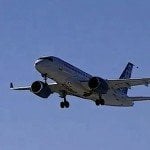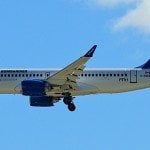

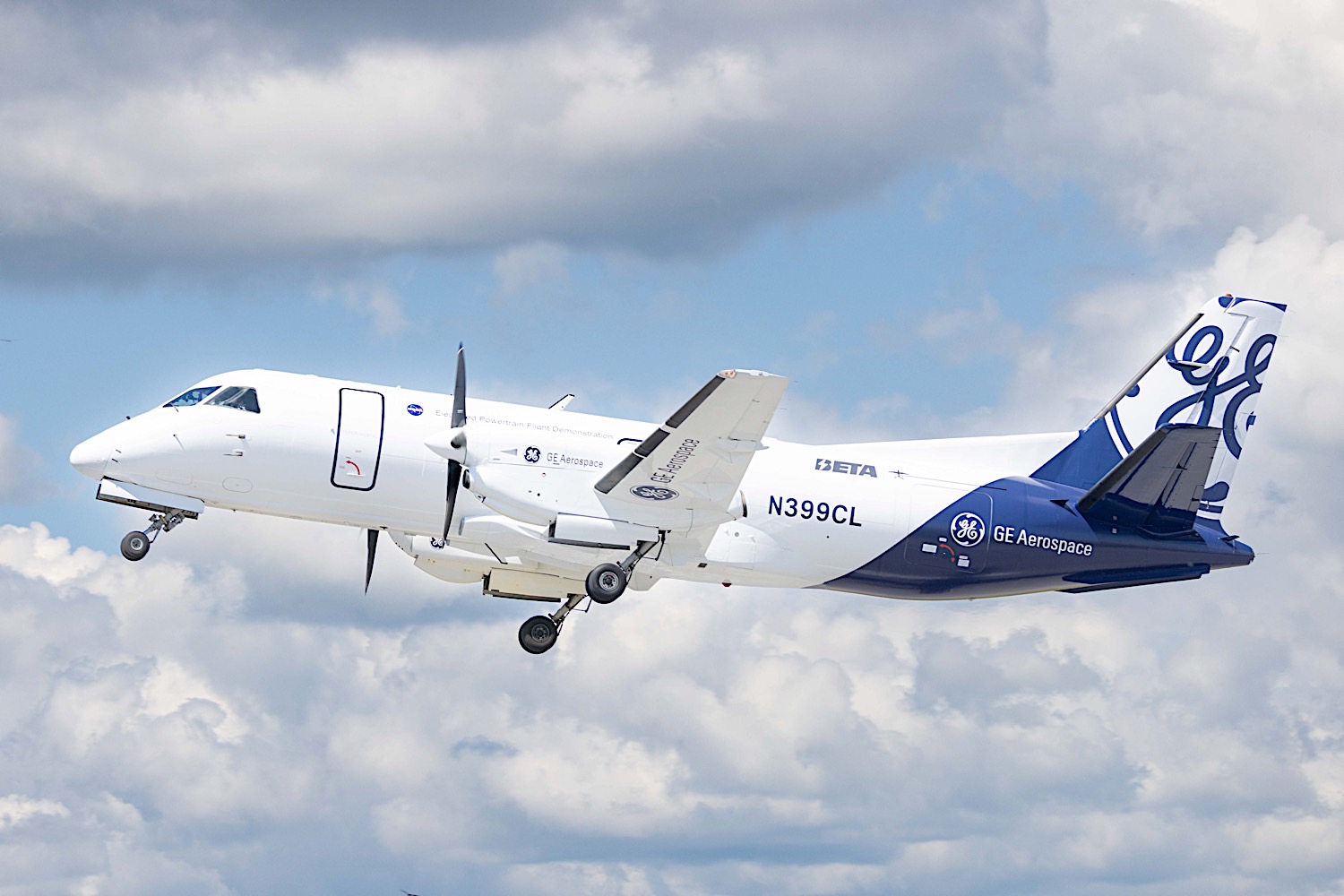
In July 2026, GE Aerospace, in collaboration with NASA, BETA Technologies, and Boeing, achieved the aviation industry’s first hybrid-electric flight above 30,000 feet—the cruising altitude of commercial passenger aircraft . The milestone was publicly unveiled at the Farnborough International Airshow, where the modified test aircraft was displayed and flown in daily demonstration flights.
The Test Platform and Propulsion System
The flight test campaign utilized a modified Saab 340B aircraft, with the right side housing the experimental hybrid-electric system within an inverted nacelle designed for additional ventilation . The fully integrated, megawatt-class, multi-kilovolt propulsion system was developed under NASA’s Electrified Powertrain Flight Demonstration (EPFD) project . Key system components included:
- GE Aerospace-developed motor/generators, power converters, inverters, and controllers
- Avio Aero gearboxes and Dowty R390 propellers
- A CT7 turboprop engine integrated with electric powertrain components
- BAE Systems-supplied batteries
- Aurora Flight Sciences (Boeing subsidiary) nacelle structure
Flight Test Performance
The team’s single longest flight in hybrid-electric operation exceeded two hours, with the electric powertrain simultaneously powering the propeller and charging the battery . Following successful U.S. test flights, BETA Technologies pilots ferried the aircraft across the North Atlantic to the UK for the airshow, operating in hybrid-electric mode during each leg of the journey—including stops at Nuuk Airport in Iceland and Bournemouth Airport .
Technical Significance and Industry Validation
Hybrid-electric propulsion combines an electric powertrain with a traditional gas turbine to optimize power management across different flight phases . The technology is designed to be compatible with various fuel types and advanced engine architectures like the Open Fan concept being developed under the CFM International RISE program .
Engineering teams successfully addressed unique challenges including heat management, lower atmospheric pressures, and power density requirements, utilizing flightworthy components that meet higher safety and reliability standards than typical test hardware . Kyle Clark, CEO of BETA Technologies, noted that the system “improved the high-altitude performance and climb capability while creating a flying laboratory to inform all future hybrid designs” .
Long-Term Development Context
GE Aerospace was first awarded the NASA EPFD contract in 2021 to demonstrate flight readiness of hybrid-electric technologies for single-aisle aircraft . This achievement builds on more than 15 years of NASA aeronautics research addressing power, thermal, battery, and systems integration challenges . NASA engineers validated the system at the agency’s Electric Aircraft Testbed facility in 2022, simulating altitude conditions up to 45,000 feet .
The demonstration validates hybrid-electric technology for commercial aircraft and supports next-generation propulsion development under the CFM International RISE program, which targets more than 20% lower fuel burn compared to current commercial engines .
Sources
- GE Aerospace Press Release: https://www.geaerospace.com/news/press-releases/ge-aerospace-partners-nasa-beta-technologies-and-boeing-worlds-first-high-altitude
- NASA Official Release: https://www.nasa.gov/aeronautics/electrified-aircraft-propulsion/nasa-ge-hybrid-electric-flight/
- Aerospace Global News: https://aerospaceglobalnews.com/news/ge-aerospace-first-hybrid-electric-flight-above-30000-feet/
- Aviacionline: https://www.aviacionline.com/english/manufacturers-mro/world-first-commercial-aircraft-surpasses-30-000-feet-in-hybrid-electric-mode_a6a5e66fe33ceacd2633fab7e
- ET Infra: https://infra.economictimes.indiatimes.com/news/aviation/ge-aerospace-ties-up-with-nasa-beta-technologies-and-boeing-for-first-hybrid-electric-flight-above-30000-ft/132532818
- Yahoo Finance: https://tech.yahoo.com/transportation/articles/ge-aerospace-completes-first-high-175833836.html