
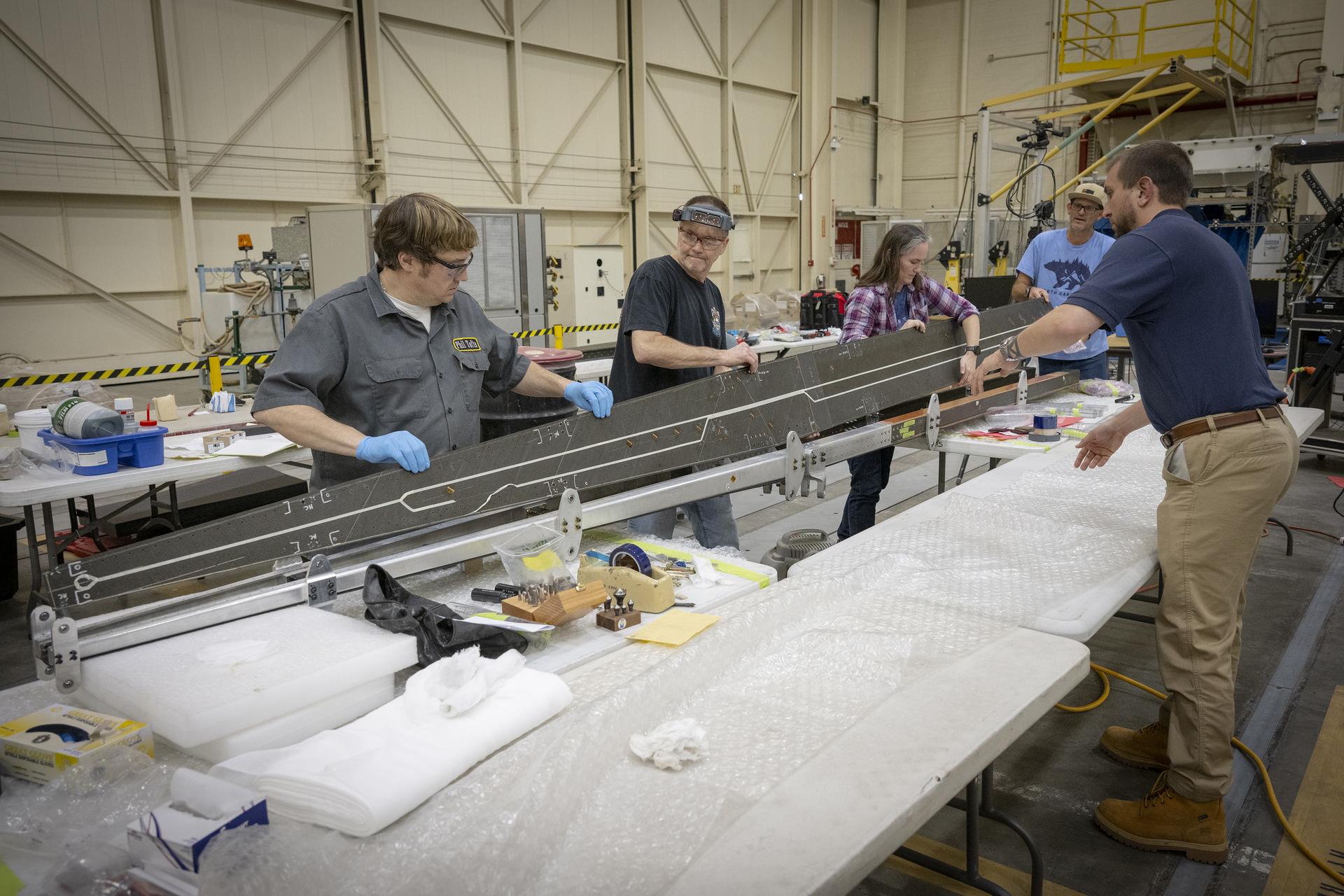
Engineers at NASA have successfully completed a critical milestone in the development of next-generation ultra-efficient aircraft by validating the structural integrity of a novel composite truss-braced wing design. The 15-foot test article, designated SWEET-15 (Structural Wing Experiment Evaluating Truss-bracing), was subjected to a rigorous series of structural tests at NASA’s Armstrong Flight Research Center.
NASA/Christopher LC Clark
The wing design, which incorporates a long, thin profile supported by an aerodynamic strut, represents a significant departure from conventional commercial aircraft wings. This configuration promises to reduce fuel burn by up to 30% by minimizing drag, but it necessitates advanced composite manufacturing and assembly technologies to achieve the required strength-to-weight ratio. For this test, engineers integrated five different advanced composite technologies, utilizing the Integrated Structural Assembly of Advanced Composites robot at NASA Langley to produce the lightweight structure.
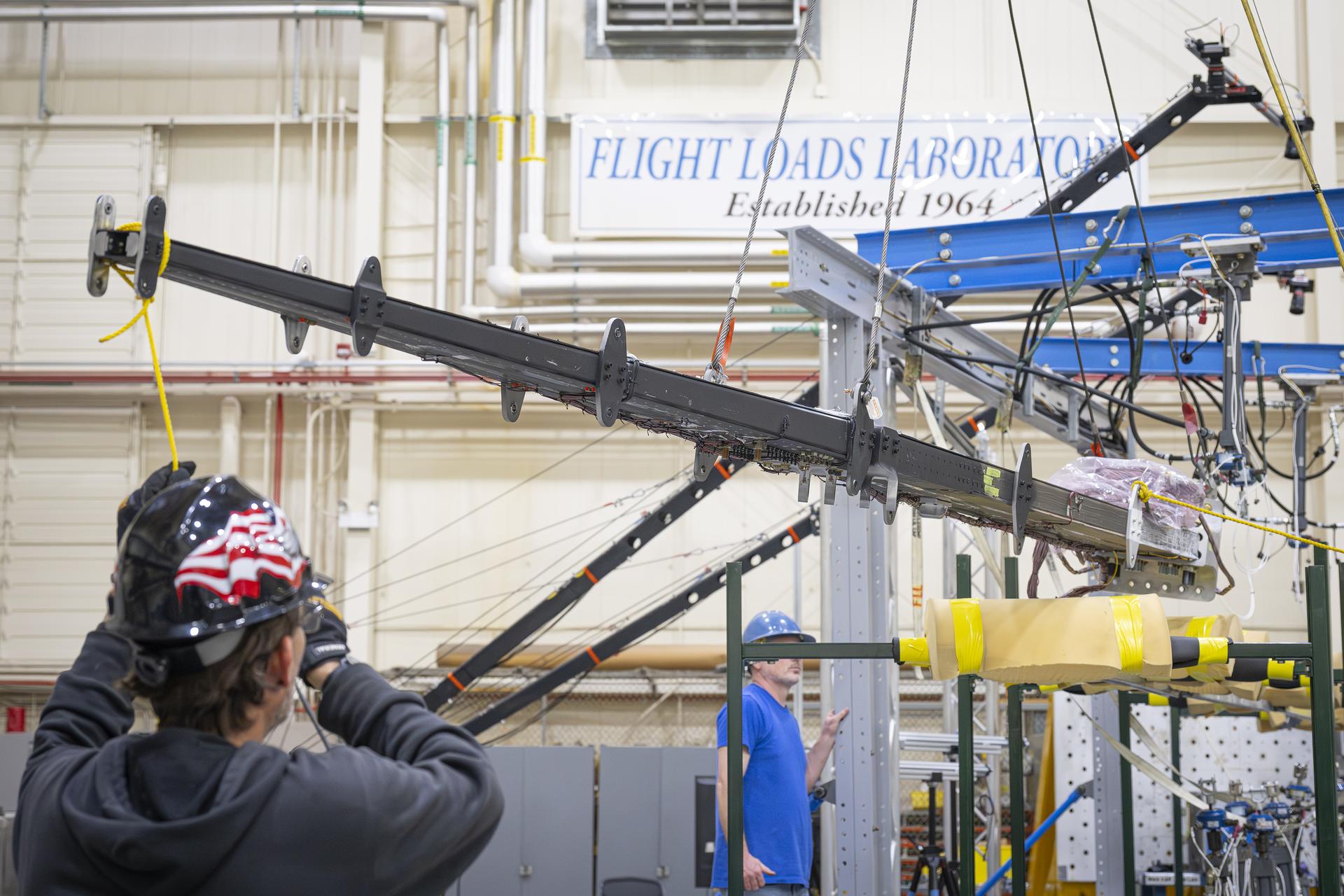
The test campaign involved incrementally applying loads to the wing while numerous strain and load sensors, including fiber-optic strain sensors, tracked the structural response. The data confirmed the team’s computational models, demonstrating that the wing could withstand anticipated in-flight forces without issue.
NASA/Christopher LC Clark
The test was concluded with a deliberate test-to-failure, where engineers pushed the structure beyond its design limits. The wing ultimately failed at approximately 127% of its design limit load, with visible damage occurring near the trailing edge and in the upper wing cover. This data provides invaluable insight into the behavior of the complex joints connecting the wing to its main and jury struts under extreme conditions, validating the structural approach for future full-scale demonstrators.
Sources:
https://www.nasa.gov/aeronautics/nasa-pushes-new-wing-design-to-find-structural-limits/
https://www.aero-mag.com/nasa-proves-composite-truss-braced-wing-concept-with-successful-tests
https://www.yahoo.com/tech/nasa-pushed-truss-braced-wing-120000893.html