
Advanced Materials Science Meets Subsurface Engineering
As the oil and gas industry faces immense pressure to reduce its carbon footprint, a quiet revolution is happening at the most fundamental level: the cement that seals wells. New engineered geopolymer and low-carbon cement formulations are moving from lab curiosities to critical field trials, promising to slash emissions while solving persistent engineering challenges in zonal isolation and long-term well integrity. This is a story of materials science innovation under extreme constraints.
The Engineering Imperative: More Than Just “Green”
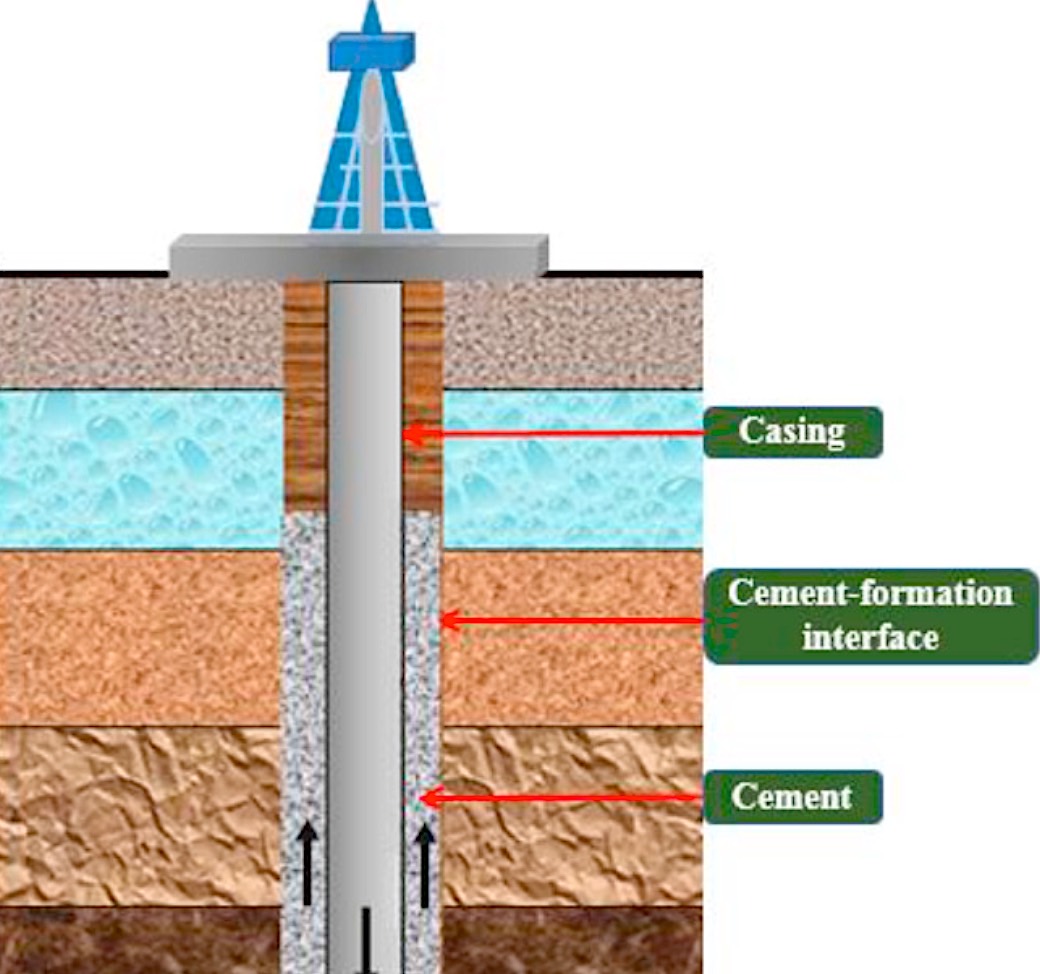
For the engineering audience, this is framed not just as an Environmental, Social, and Governance (ESG) story, but as a performance materials breakthrough. Portland cement, the industry standard for decades, has known functional limitations: susceptibility to corrosive acids (H₂S, CO₂), shrinkage causing micro-annuli (leak paths), and a notoriously high carbon footprint from its clinker production process. The new generation of advanced cements addresses both the environmental and functional design flaws of their predecessor.
Core Breakthroughs & Design Angles
1. Geopolymer Chemistry: Designing a Rock from Waste Streams
The Science: Geopolymers are inorganic polymers formed by activating aluminosilicate materials (like fly ash from power plants or metallurgical slag) with an alkaline solution. This creates a 3D networked structure at near-ambient temperatures. Unlike Portland cement’s calcium silicate hydrate (C-S-H) structure, geopolymers form an aluminosilicate gel (N-A-S-H or C-A-S-H) known for its density and chemical inertness.
The Engineering Design Challenge: The “recipe” is everything. Engineers must design the activator chemistry (alkali type, concentration) and optimize the aluminosilicate mix to achieve target set times, compressive strength, and rheology for precise downhole placement. Recent work focuses on retarders and accelerators tailored specifically for geopolymer systems to give field crews the necessary working time before a rapid and reliable strength development.
2. Tailored Performance for Extreme Environments
Corrosion Resistance
A key design advantage: Geopolymers exhibit superior chemical stability in highly acidic environments compared to Portland cement. When exposed to acids like those found in CO₂ injection or sour (H₂S) reservoirs, Portland cement’s C-S-H structure can dissolve, leading to porosity and strength loss. Geopolymers resist this degradation—a direct materials property benefit critical for long-term well abandonment and CCUS applications.
Mechanical Properties
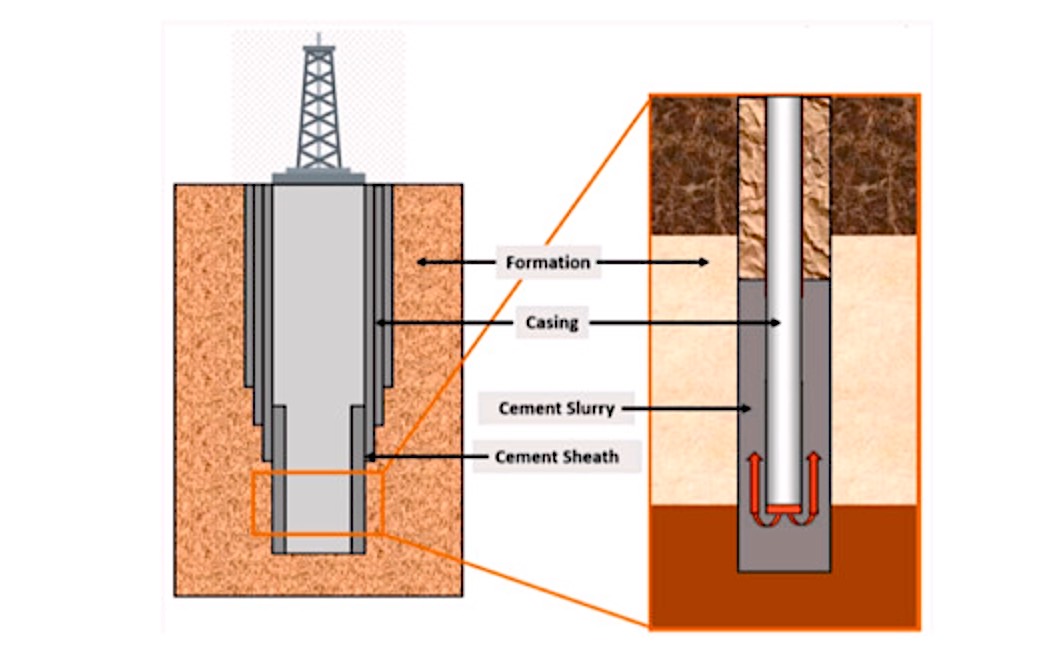
Research shows these cements can be engineered for better flexibility (a lower Young’s modulus) to withstand cyclic stress from hydraulic fracturing or pressure changes, and for improved shear bond strength, which is crucial for preventing annular gas migration and maintaining zonal isolation. This flexibility allows the cement sheath to absorb stress rather than cracking.
Self-Healing and Smart Properties
The cutting edge involves engineering micro-capsules of healing agents or pH-sensitive polymers into the cement matrix. When a microcrack forms and exposes these agents (often due to environmental changes inside the crack), they react to seal the crack autonomously—a major leap in designing for decades-long integrity. This moves the material from inert to responsive.
3. The Carbon Math: Embedded in the Design
The carbon reduction isn’t a side effect; it’s designed into the material’s DNA. By utilizing industrial by-products (fly ash, slag) and eliminating the high-temperature clinker production step central to Portland cement manufacturing, the embodied carbon can be reduced by 70-90%. For engineers, this means the sustainability metric (kg CO₂e/m³) is now a standard specification sheet parameter alongside traditional metrics like compressive strength and density.
Field Evidence & Citations
The technology is rapidly transitioning from R&D to commercial application, evidenced by recent industry announcements and peer-reviewed data:
| Technology/Source | Key Finding/Application | Significance for Engineers |
|---|---|---|
| Halliburton’s “Sustenna™” (Feb 2024) | Commercial low-carbon cement system citing 40% reduction in carbon intensity in KOC case study. | Shows a major service company commercializing and branding this technology for the mainstream market with quantifiable results. |
| SPE Paper 217672-MS (March 2024) | Successful deployment of a slag-based geopolymer cement system for zonal isolation in a North Sea well. | Provides peer-reviewed, hard field data on mix design, placement procedures, and post-set performance verification in a high-consequence operating area. |
| NETL Fact Sheet (Jan 2024) | Foundational research on microbial-induced calcium carbonate precipitation (MICP) for cement self-healing. | Points to the future frontier of engineered cement, moving from inert to autonomously responsive “bio-cements.” |
The Designer’s Dilemma: Trade-offs and Verification
Acknowledge the real-world challenges your readers face when adopting new technology:
Supply Chain & Consistency
Engineering a consistent, high-performance product from variable industrial waste streams (fly ash, slag) requires rigorous quality control and logistics. The industry needs reliable, large-scale supply chains to support global adoption.
New Standards & Models
Existing cement evaluation logs (CBL/VDL) and laboratory testing protocols are calibrated for the acoustic and physical properties of Portland cement. New models and possibly new logging tools are needed to accurately verify the bond quality and integrity of geopolymer systems downhole.
Cost vs. Total Lifecycle Value
While the upfront material cost of a highly engineered geopolymer system may initially exceed that of conventional cement, the conversation shifts to Total Lifecycle Cost (TLC). This calculation factors in the reduced risk of integrity failure, minimized future remediation expenses, and the economic benefit of meeting lower-carbon specifications.
A Foundation for the Future
These advanced cements are more than a niche, “green” product. They represent a fundamental shift in how engineers approach well design—where the sealing material is a highly engineered, multifunctional composite chosen specifically for its mechanical, chemical, and environmental properties. As carbon pricing and stringent well integrity regulations continue to evolve globally, this materials science breakthrough is poised to become the new standard, transforming a century-old practice from the ground up and providing a truly robust foundation for the energy transition.
NOTES and Research
Engineered Geopolymers Redefining Well Integrity in Low Carbon Era https://www.researchgate.net/publication/369054597_Expandable_Geopolymers_for_Improved_Zonal_Isolation_and_Plugging
First Low-Carbon Geopolymer-Based Cement-Free Primary Wellbore Isolation in an Offshore Location: A Case Study from Qatar https://onepetro.org/SPEATCE/proceedings-abstract/25ATCE/25ATCE/D031S035R002/791884?redirectedFrom=PDF
Science Direct Oil Well Cementing https://www.sciencedirect.com/topics/engineering/oil-well-cementing