
For decades, the aerospace industry has operated within the thermodynamic limits of conventional rocket engines—designs that have seen only incremental efficiency gains since the Apollo era. That paradigm may finally be shifting. A Houston-based startup, Venus Aerospace, has achieved what was long considered one of aerospace’s most promising but elusive propulsion concepts: the successful flight test of a rotating detonation rocket engine (RDRE). By replacing traditional combustion with controlled detonation, this technology promises to redefine what is possible in defense, space, and high-speed commercial travel .
The Science of Detonation Propulsion
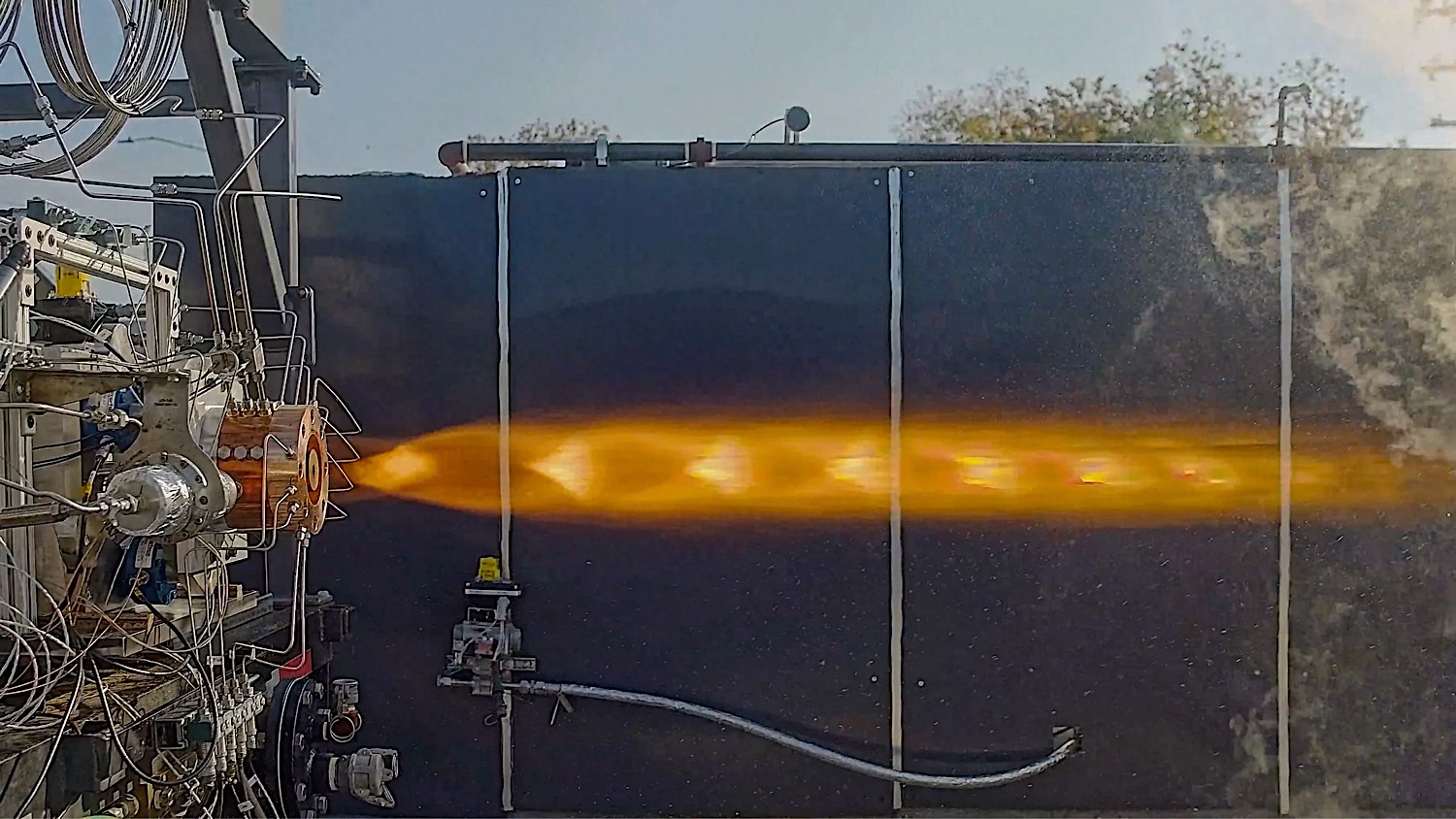
The Rotating Detonation Rocket Engine represents a fundamental departure from conventional propulsion. While traditional rocket engines rely on deflagration—the subsonic combustion that powers everything from car engines to rocket boosters—RDRE harnesses detonation: a supersonic combustion wave that produces shockwaves to generate thrust .
Venus Aerospace:
The engine’s design is deceptively simple. It consists of a tube inside another tube, with no moving parts. Fuel and oxidizer are combined in an annular chamber, creating a supersonic shockwave that spins around the axis at high speed. This rotating detonation wave continuously compresses and ignites incoming propellant, producing sustained thrust through what engineers call “pressure gain combustion” .
The efficiency gains are substantial. Venus Aerospace claims its RDRE achieves approximately 15% greater efficiency than traditional rocket engines. To put that in perspective, the SpaceX Merlin engine used today is only about 2% more efficient than the Saturn V engines that launched the Apollo missions more than five decades ago . This leap in performance translates directly to less fuel consumption, greater power, increased payload capacity, and longer flight ranges .
- Source: Technical explanation of RDRE operation and efficiency comparisons to existing engines. | September 2025 | Gizmodo (Science Fair feature) | https://gizmodo.com
- Source: Overview of RDRE technology and pressure gain combustion principles. | June 2025 | Aerospace Testing International | https://www.aerospacetestinginternational.com
The Historic Flight: Proving the Impossible
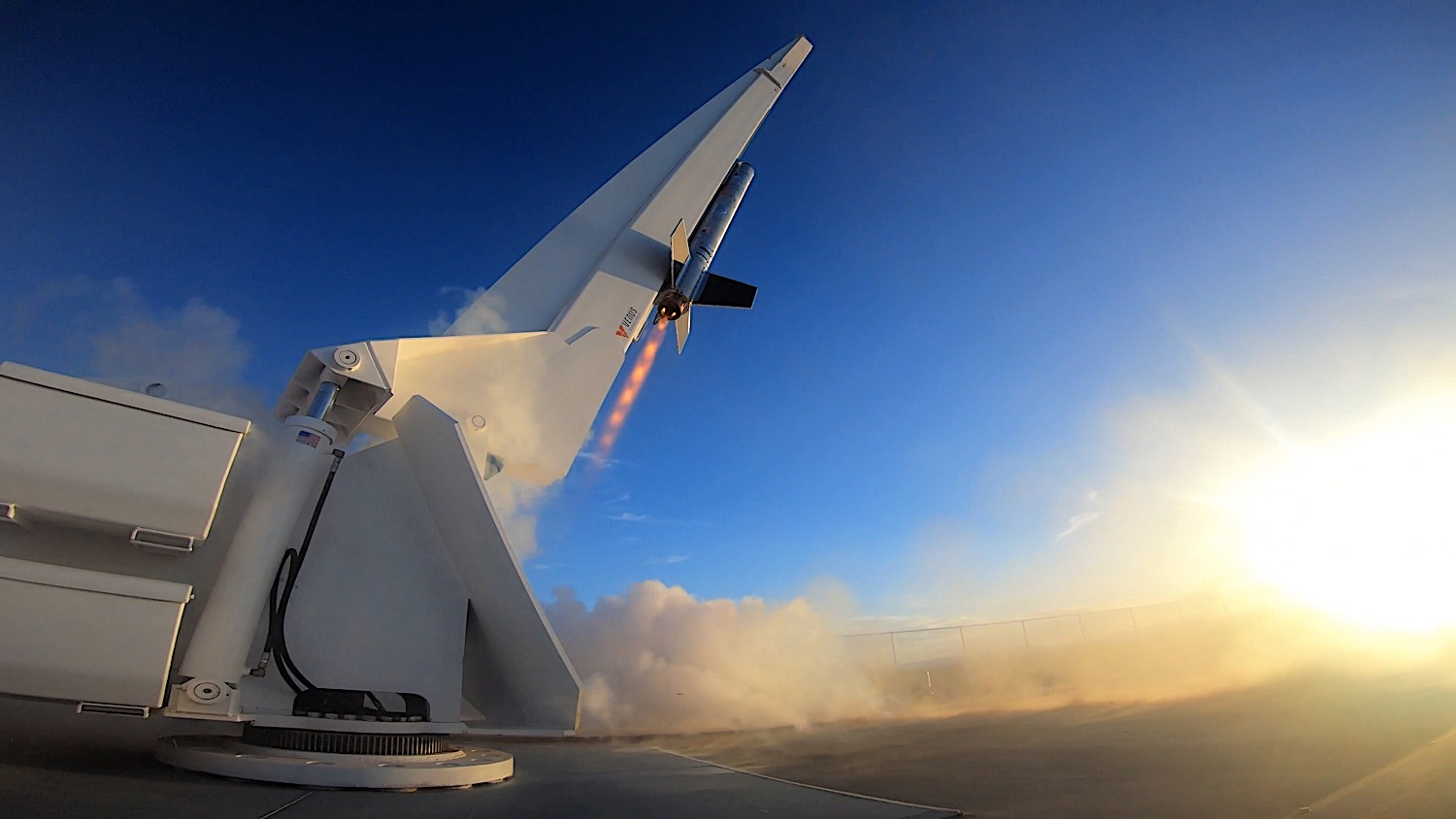
The RDRE concept has been theorized since the 1960s and experimentally tested by the U.S. Navy for over 15 years, but it remained confined to laboratories and test stands—until May 2025. On that date, Venus Aerospace made history at Spaceport America in New Mexico, successfully launching a small rocket powered by their proprietary RDRE .
The test flight was a resounding success. The engine ignited and burned for seven seconds, producing 2,000 pounds of thrust (approximately 907 kilograms) and propelling the rocket to an altitude of 4,400 feet (1,340 meters) at a speed of about 383 miles per hour (616 kilometers per hour)—roughly half the speed of sound. The rocket flew for about 30 seconds before gliding back down via parachute .
This milestone represented the first-ever flight of a U.S.-developed high-thrust RDRE, proving that the technology could perform successfully under real-world flight conditions. The achievement was particularly notable given challenging weather conditions, including heavy winds on the evening before the flight attempt .
“It’s one thing to have an engine on a test stand, it was roaring and doing all the things it needed to do, but it’s totally different when you go fly that engine,” said Sassie Duggleby, co-founder and CEO of Venus Aerospace. “It was four years of dreaming…and it was perfect, the launch could not have gone better.”
- Source: Detailed account of the May 2025 test flight, performance data, and CEO quote. | September 2025 | Gizmodo | https://gizmodo.com
- Source: Confirmation of the first U.S. RDRE flight test and its significance. | June 2025 | Aerospace Testing International | https://www.aerospacetestinginternational.com
From Concept to Commercialization
The path to this breakthrough began with a simple conversation. Around seven years ago, Sassie Duggleby and her husband Andrew were living in Yokosuka, Japan, discussing whether to fly back to Southern California for her grandmother’s birthday—a 13-hour journey with their daughters. Andrew raised the idea of a rocket engine that could theoretically fly them home in an hour. “I literally laughed at him at that moment, but we flew that rocket engine three months ago,” Duggleby recalled .
A year later, the pair was working at Virgin Orbit when academic research on RDRE began gaining traction. In April 2020, a paper published in Combustion and Flame presented experimental evidence of continuous detonation in an RDRE, demonstrating its potential for upper-stage rockets. “We looked around at all the people, really smart, great people, we worked with, and were like, well, surely someone sees this engine and wants to go commercialize it,” Duggleby said. “Ultimately we realized it was us.”
The couple quit their jobs during the pandemic and founded Venus Aerospace in 2020 with the objective of engineering the world’s most efficient, reusable hypersonic engines . Since then, the company has raised more than $80 million in funding from prominent investors including Mercury Fund, Lockheed Martin Ventures, Prime Movers Lab, Airbus Ventures, and Trousdale Ventures, with additional support from NASA and the U.S. Air Force .
- Source: Origin story of Venus Aerospace and funding background. | September 2025 | Gizmodo | https://gizmodo.com
- Source: Investor and government support details. | June 2025 | Aerospace Testing International | https://www.aerospacetestinginternational.com
The Stargazer Vision: Hypersonic Passenger Travel
Venus Aerospace’s ultimate ambition extends far beyond rockets. The company is developing the Stargazer M4, a reusable passenger aircraft designed to cruise at Mach 4 (four times the speed of sound) and capable of reaching Mach 9 at peak speed . At those speeds, a flight from Los Angeles to Tokyo would take under two hours—a journey that currently requires 13 hours or more .
The key to this vision is the integration of the RDRE with an air-breathing detonation ramjet called the VDR2 (Venus Detonation Ramjet 2). This hybrid system addresses a fundamental challenge: traditional ramjets have no moving parts to compress incoming air, meaning they cannot operate effectively at subsonic speeds and typically require a rocket booster or high-speed aircraft drop to start .
Venus Aerospace has overcome this limitation. The RDRE generates the necessary air pressure to start combustion from the ground, enabling runway takeoff. Once the aircraft reaches approximately Mach 3.5, the RDRE shuts off, and the ramjet takes over propulsion, enabling hypersonic cruise speeds exceeding Mach 6—all without requiring additional rocket boosters . This combined cycle approach improves fuel efficiency by approximately 20% compared to conventional engines .
- *Source: Explanation of the VDR2 air-breathing ramjet and combined cycle operation. | November 2025 | Futura-Sciences | https://www.futura-sciences.com*
- Source: Stargazer M4 passenger aircraft development and speed targets. | June 2025 | Defence ReDEFiNED | https://defenceredefined.com.cy
Industry Recognition and Future Plans
Venus Aerospace’s achievements have not gone unnoticed. In June 2026, the company was selected for the World Economic Forum’s Technology Pioneers cohort, joining 100 early-stage companies recognized for their potential to reshape industries and address global challenges. As a Technology Pioneer, Venus will participate in Forum initiatives through the Future of Space Community over the next two years .
“Frontier technologies matter most when they expand what people, industries, and nations can do,” said Sassie Duggleby. “For Venus, RDRE does not just represent a more efficient engine. It is a foundation for faster movement, more capable space systems, and new forms of connectivity across the planet. Being named a Technology Pioneer validates the potential of this technology to help shape a future where distance is less limiting.”
The company is now progressing to full-scale propulsion testing and vehicle integration. It plans to integrate the VDR2 into a drone demonstrator later in 2026, with the Stargazer M4 passenger aircraft as the long-term goal . This momentum aligns with market projections: the global hypersonics market is forecast to exceed $12 billion by 2030, driven by demand across defense, aerospace, and commercial aviation sectors .
Dr. Rodney Bowersox, associate dean for research and professor of aerospace engineering at Texas A&M University, captured the significance of the moment: “Rotating detonation rocket engines have been a scientific curiosity for decades. Venus is showing the world that they aren’t just academically interesting—they’re buildable, testable, and operational under real-world conditions.”
- Source: World Economic Forum Technology Pioneers selection and CEO quote. | June 2026 | Venus Aerospace press release via PRNewswire | https://www.tmcnet.com
- Source: Commercial roadmap, drone demonstrator plans, and expert commentary. | June 2025 | Aerospace Testing International | https://www.aerospacetestinginternational.com
- *Source: Drone integration timeline and Stargazer M4 roadmap. | November 2025 | Futura-Sciences | https://www.futura-sciences.com*
From Concept to Flight-Proven Reality?
Venus Aerospace has transformed a decades-old scientific curiosity into a flight-proven reality. By successfully demonstrating the first high-thrust RDRE in the United States, the company has opened a new chapter in propulsion technology—one that promises to make hypersonic flight not just faster, but more efficient, more affordable, and more accessible.
The implications extend across defense, space exploration, and commercial aviation. For the defense sector, RDRE offers extended range and payload capacity for critical missions. For space systems, it provides a compact, efficient upper-stage propulsion solution. And for commercial travel, the Stargazer M4 represents a vision that could shrink the planet in ways unimaginable just a few years ago .
As Venus Aerospace moves from test flights to full-scale vehicle integration, the aerospace industry is watching closely. The age of detonation propulsion has arrived—and it is powered by controlled explosions.
Sources Summary
|
Description |
Date |
Author/Source |
Link |
|
World Economic Forum 2026 Technology Pioneer selection |
June 2026 |
Venus Aerospace / PRNewswire |
|
|
Technical explanation and test flight details, origin story |
September 2025 |
Gizmodo |
|
|
First U.S. RDRE flight test, expert commentary |
June 2025 |
Aerospace Testing International |
|
|
VDR2 ramjet technology, Stargazer M4 roadmap |
November 2025 |
Futura-Sciences |
|
|
Hypersonic engine test, combined cycle operation |
June 2025 |
DEFENCE ReDEFiNED |
|
|
HBS Breakfast Forum event details |
February 2026 |
HBS Club of Houston |